
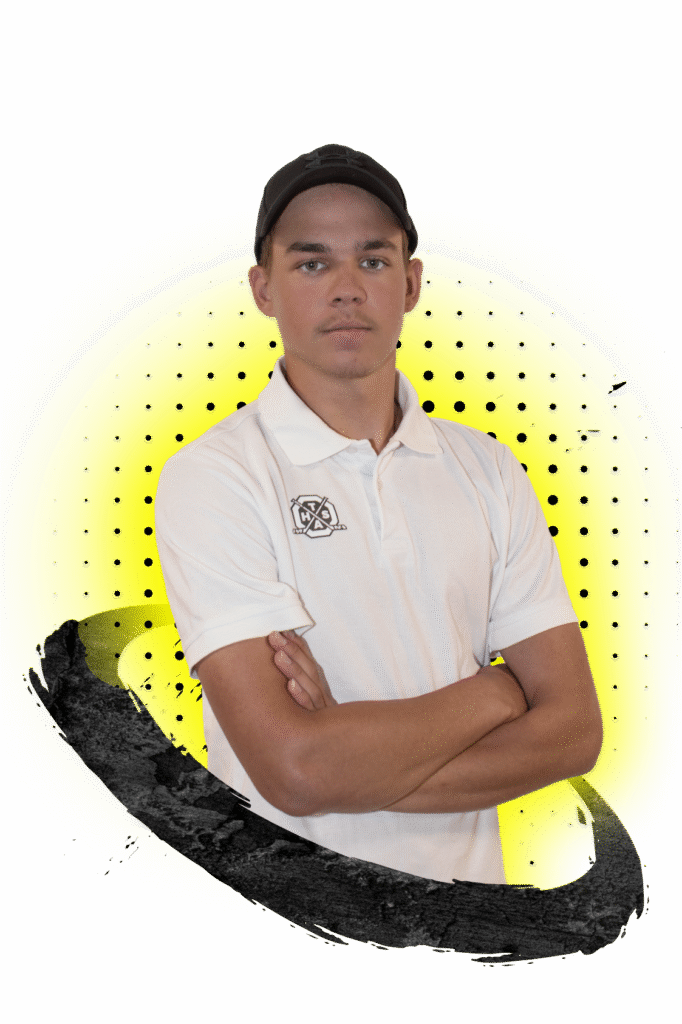
Daniil Afonin – Player and Coach Driven by Passion Ice hockey has been a part of my life since childhood and continues to shape my everyday routine. I currently play in the North American junior league NAHL, where I experience firsthand what modern hockey truly demands: high speed, quick game awareness, mental resilience, and physical strength. This environment shows me every day how the sport is evolving—and what challenges young players will have to meet in the future. Alongside my active career, I work intensively as a coach. I have trained children aged 7 to 15 and also served as a coach for the U9/U7 team in Düsseldorf, where I helped design training plans, structure practice sessions, and lead both on-ice and off-ice training. Through this work, I’ve learned how differently children absorb information, which methods work best at various stages of development, and how important it is to give them freedom while still providing direction.
My Approach to Developing Young Players: Technical skills—skating, puck control, shooting—are the foundation of every hockey player. But modern hockey goes far beyond that. What matters most to me is developing a player’s hockey IQ: making quick decisions under pressure, reading the game intuitively, and acting independently on the ice—even without direct instructions from a coach. I don’t believe in rigid systems that children must follow blindly. Young players need to learn to think for themselves, make mistakes, find solutions, and try again. This is the only way true game intelligence develops. Equally important is the freedom to be creative. Players who are allowed to make decisions grow faster, become more independent, and are valuable in any system. Life off the ice also plays a decisive role: consistent athletic training, healthy nutrition, proper sleep, recovery, and mental stability. A player who understands that professionalism extends far beyond the rink gains a significant advantage.
My Core Principle: You should never be afraid to change things that aren’t working. Many players and parents wait too long, hoping that “things will eventually get better.” But in hockey, that rarely happens. If the training process no longer produces progress, new impulses are needed. Growth is impossible without initiative. Mistakes are not failure—they show the direction in which you need to work. Stagnation is the real opponent. My advice to young players is simple: take action when you feel something is off. Change your approach, your rhythm, your environment. Only then can you reach a level that once seemed out of reach.

 English
  German