
Anton Tsipan
Head Coach
My goal is to pass on to his charges the love for hockey and the energy he himself experienced as a child. I strive to create an atmosphere where every player feels like an important part of the team.
I started my journey in hockey at the age of 6. At the first viewing, the coach said I was too small for the sport and jokingly remarked that there was no protective equipment for my size! When we came back a year later, I was already confident on the ice. Hockey immediately and unconditionally became an important part of my life.
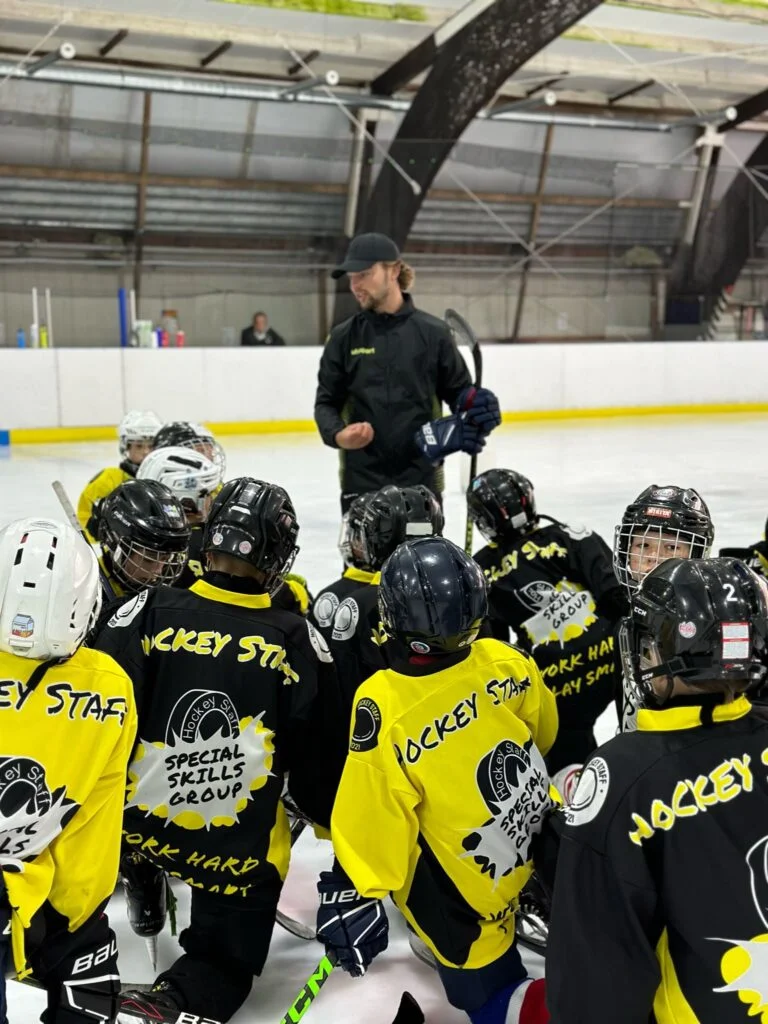
"A coach is not just a teacher, but a mentor who can make a difference in a child's life."
Transition to Coaching
- My professional career ended at the age of 22 due to an injury.
- I decided to stay in hockey and inspire the next generation.
I always dreamed of being that teacher or coach who brings soul to the process, engaging students and creating a real dialogue. Teaching can be very engaging. It all depends on the presentation of information and the sincere involvement of the trainer. It was this thought that became the main inspiration on my path to coaching. I am convinced that hockey is more than just physical activity. It’s passion, it’s a team, it’s life on and off the ice.
Now, when I stand on the ice arena as a coach, I try to pass on to my charges the same energy and love for hockey that I felt as a child. It is important not only to teach technique and strategy, but also to inspire the guys to constantly develop themselves, to support team spirit and love for the game. At each session, I strive to create an atmosphere in which each participant feels an important part of the team and finds his or her special place in this amazing sport.
Experiences and Achievements
- Actively works with children of different ages.
- Conducts hockey camps in Europe (Germany, Belgium, Holland, Switzerland).
- Has a recent co-operation with a Swiss club.
- Believes that the main achievements are the successes of his students.
“My achievements are my students. I am proud to be a part of their growth and development.”
We are active with children of all ages developing their sporting skills in Germany and throughout Europe. Our hockey camps have been successfully held in countries such as Belgium, Holland, several cities in Germany, and Switzerland. Just recently we signed a contract with a Swiss club where I, as part of the coaching staff, will coach young athletes. This is a new stage in my career and I am looking forward to the opportunities it will bring.
“I am convinced that hockey is more than just a physical activity. It’s passion, it’s a team, it’s life on and off the ice.”
“In every session, I strive to create an atmosphere where each participant feels like an important part of the team and finds their special place in this amazing sport.”
Principles and Methods
- Involvement and creating a positive atmosphere for the development of each player.
- Sees hockey as not only a sport, but also an opportunity to teach kids important life values.
- Inspires self-development, team spirit, and love for the game.
- Maximum dedication: how not to lose a second on the rink?
- key in children – as an exciting but disciplined and attentive game.
My methods of teaching children are based on attention to detail and creating a positive atmosphere during training:
Skating Technique: Skating technique is very important, especially working with the edges: outer and inner. I emphasise correct posture, weight and balance during turns. The hockey player must be as stable and steady as possible and perform all movements efficiently, without losing speed, but even increasing it. It is important to make these movements automatic so that the child does not have to think about how to act correctly in every situation.
Efficiency and automaticity: Players have to make decisions quickly and do not have time to think about their movements. If a child spends time thinking about his technique, he loses seconds and gets pressured by the opponent. The goal is to automate effective movements so that they are performed on an instinctive level, giving the player an advantage in speed and responsiveness.
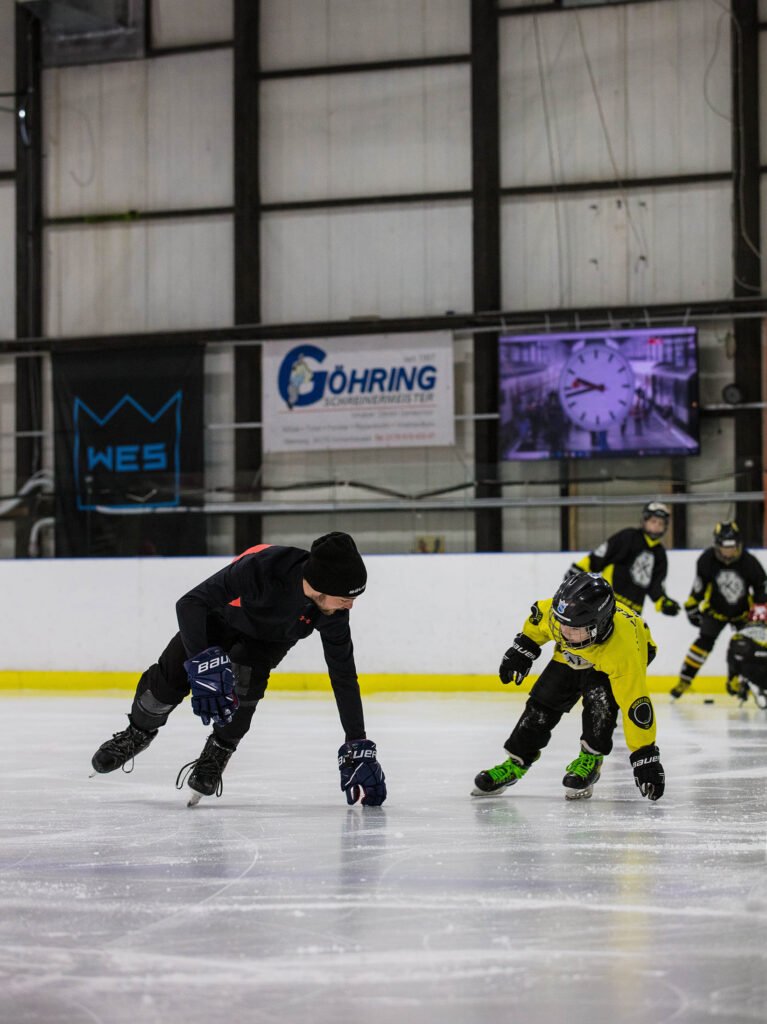
Maximum repetitions: I try to organise the training process so that the children get as many practical repetitions as possible. I don’t like it when children queue up or when the training becomes too theoretical. I demonstrate the exercises myself and then watch the children perform them, correcting their technique and giving explanations as they go along.
Positive and playful approach: I always try to create a positive atmosphere during training. It is important that the children not only learn but also enjoy the process. I incorporate elements of play into the exercises to create enthusiasm and a desire to train. This helps to keep them interested and motivated, making training a fun process. When kids fall in love with hockey, their eyes light up with a desire to learn and develop. This helps me not only to develop technical skills, but also to develop the right attitude towards hockey.
What do you pay attention to when working with a beginner and how do you help them overcome difficulties?
When I work with beginners, especially children aged 5-7, I first of all pay attention to their enthusiasm and interest. My main goal is to make them love hockey. This age is very important for developing a love for the sport. I try to create such an atmosphere to keep the kids inspired and motivated.
I talk to them about their idols, play with them on the ice and try to be a role model for them. Children at this age absorb information through observation, not words. They imitate movements, behaviour and facial expressions. Therefore, it is very important for me to be not only a coach, but also a person who inspires and motivates.
When children face difficulties, I help them, support them as much as possible. I show that mistakes are part of the learning process and encourage them for every achievement, even the smallest one. It is important to show that hockey can be interesting and joyful, and overcoming difficulties is part of the path to success.
It is very important that the child’s eyes light up when he or she goes out on the ice. If a child plays hockey without love for it, without passion and joy from the process, the probability that he will become a professional player is extremely low. Therefore, my goal is for every child at my training sessions to feel this love and desire to develop, which is the foundation for their future success in hockey.
How do you interact with parents of children? What is your strategy for creating open and trusting communication?
I always strive for open and honest interaction with parents. Before starting individual sessions, I ask parents what they feel needs more attention or improvement in their children. This allows me to better understand the parents’ needs and expectations and tailor the training accordingly.
After the training, I give feedback to the parents, analyse the exercises and identify the main points to be worked on. It is important to discuss with the parents the problems and mistakes identified during a session in order to find solutions together. Parents’ opinions are very important to me, as they have a better understanding of their child’s psychology and behaviour by observing them outside of training and seeing how they behave in games.
When the children get older, around 12-13 years old, I also actively communicate with them and ask for their own opinions on what they would like to improve or change. I ask questions, discuss their wishes, suggest different options and explain how they can achieve their goals.
Only open and trusting communication will help to achieve success.
 German
  English